Dubai Space Economy 2026: Strategic Orbital Commerce Guide
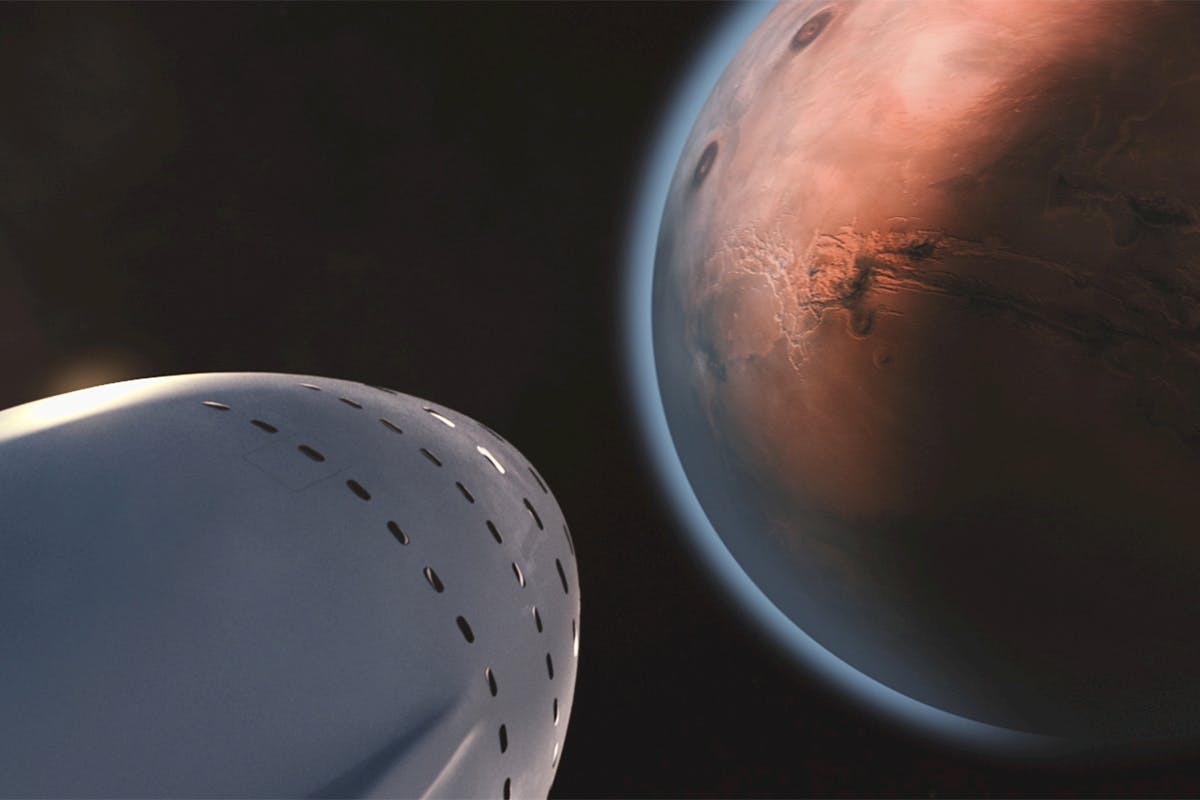
Figure 1: Strategic orbital infrastructure and the emergence of Dubai as a global hub for satellite data processing in 2026.
The Orbital Alpha: Dubai’s Strategic Ascent into Space Commerce 2026
As we analyze the global capital flows in February 2026, a new asset class has emerged above the atmosphere. The Space Economy is no longer a government-led scientific endeavor; it is a $1.2 Trillion industrial sector. Dubai, leveraging its position as a global logistics pioneer, has successfully transitioned from "sea and air" to "orbital" supply chains. Building on the record-breaking satellite launch data of 2025, Dubai in 2026 has become the premier hub for satellite data analytics and lunar logistics services within the Dubai financial ecosystem.
For the institutional investor, the 2026 landscape is defined by "Vertical Expansion." Just as we've detailed the Dubai 2030 wealth revolution, the space sector is the final frontier of that $8 Trillion mandate. Strategic capital advisory is now incorporating orbital assets as a hedge against terrestrial volatility, moving capital into high-growth sectors that were previously considered science fiction.
I. 2025 Data Review: The Satellite Boom
In 2025, the Mohammed Bin Rashid Space Centre (MBRSC) recorded a 45% increase in commercial satellite partnerships. This wasn't just about exploration; it was about Space-as-a-Service (SaaS). By the end of Q4 2025, Dubai-based private firms were providing real-time agricultural and climate data to over 60 countries. This data is now pivotal for tracking Green Hydrogen production metrics and environmental compliance globally.
[Image of satellite communication network diagram]2025 Space Sector Milestones
- Commercial Launches: Dubai-linked ventures facilitated 12 successful orbital deployments.
- Data Monetization: The market for orbital analytics grew by 38%, supporting e-commerce logistics optimization.
- R&D Inflow: Space-tech startups in Dubai attracted over $800 Million in VC funding.
- Tax Incentives: Qualifying space R&D benefited from the 0% Corporate Tax qualifying income status.
The financial physics of orbit is complex. To understand the Return on Investment (ROI) for a satellite constellation, 2026 investors use the simplified orbital yield formula:
Where $P_{data}$ is the price per terabyte of intelligence and $V_{stream}$ is the daily transmission volume. In February 2026, Dubai's low-latency ground stations have pushed this ROI to record levels.
| Sector | 2025 Growth | 2026 ROI Profile | Primary Driver |
|---|---|---|---|
| Orbital Manufacturing | +28% | High / Long-term | Sharia-compliant Space Mutual Funds |
| Satellite Broadband | +19% | Stable | Global 6G Integration |
| Lunar Logistics | +55% | Speculative | Space Mining vs. Gold Bullion |
II. Investing in "Zero-Gravity" Manufacturing
One of the most exciting breakthroughs we are witnessing in February 2026 is the rise of orbital labs. In 2025, researchers in Dubai’s space-tech zones proved that certain complex proteins and semiconductors can be produced with far fewer defects in a microgravity environment ($g \approx 0$). For the 2026 investor, the focus has shifted from "the rocket" to "the cargo"—specifically high-value pharmaceutical manufacturing that is only possible in space.
III. Lunar Logistics: The Gateway to the Deep Space Economy
Looking at the 2026 horizon, the "Moon" has moved from a destination to a logistics hub. Under the UAE’s lunar strategy, Dubai has positioned itself as the Earth-base for "last-mile" lunar delivery. This requires sophisticated corporate risk management and insurance indemnity for assets that must survive the escape velocity of $v_{escape} \approx 11.2 \text{ km/s}$.
Institutional investors are now treating lunar transport as a specialized branch of global logistics. The same principles that built Jebel Ali are being applied to "Station Gateway" in orbit. In February 2026, we see the first space-tech IPOs on the Dubai Financial Market (DFM), providing liquidity to companies building the tugs and landers of the next decade.
The Role of Space-Tech in Real Estate and Banking
Surprisingly, the space economy has triggered a boom in terrestrial Dubai real estate development. Specialized ground-station hubs and data centers require ultra-secure facilities. This has created a niche market for industrial property, where financing and mortgages for tech-ready infrastructure are seeing double-digit growth. Furthermore, opening corporate bank accounts for space-ventures has been streamlined by new DIFC regulations that recognize orbital assets as valid collateral.
IV. Space Debris and Orbital Sustainability: The ESG of the Void
In early 2026, sustainability is not limited to Earth. As we discussed in the green energy revolution, ESG mandates now extend to "Orbital Hygiene." Companies that can actively remove space debris or extend satellite life-cycles are the new darlings of the institutional investment community. Dubai is leading this charge by hosting the world’s first "Orbital Traffic Control" center, using AI to prevent collisions that could threaten billions in satellite assets.
Orbital Property Rights: The Legal Frontier 2026
A major area of expansion in February 2026 is Space Law. Under the UAE’s progressive legal framework, private companies can now claim extraction rights for celestial resources. This has led to a synergy between traditional gold mining interests and lunar prospecting ventures. The "City of Gold" is preparing for an era where the gold might not come from the ground, but from the stars.
V. Conclusion: The Strategic Mandate of February 2026
The verdict for 2026 is clear: The Space Economy is the ultimate diversifier. Whether it is through Golden Visa opportunities for tech founders or investing in the infrastructure of tomorrow, the orbital sector offers an "Alpha" that terrestrial markets cannot match. Dubai’s ascent is no longer just horizontal across the desert, but vertical toward the stars. The 2025 data has proven the concept; 2026 is the year of institutional execution.
* MBRSC: Annual Commercial Orbital Report 2025.
* UAE Space Agency: Lunar Logistics Regulatory Framework 2026.
* Morgan Stanley: Global Space Economy Outlook (Q1 2026 Analysis).
* Dubai Free Zone Space-Tech Incentives.
* Space-Sector VAT & Tax Guidelines 2026.